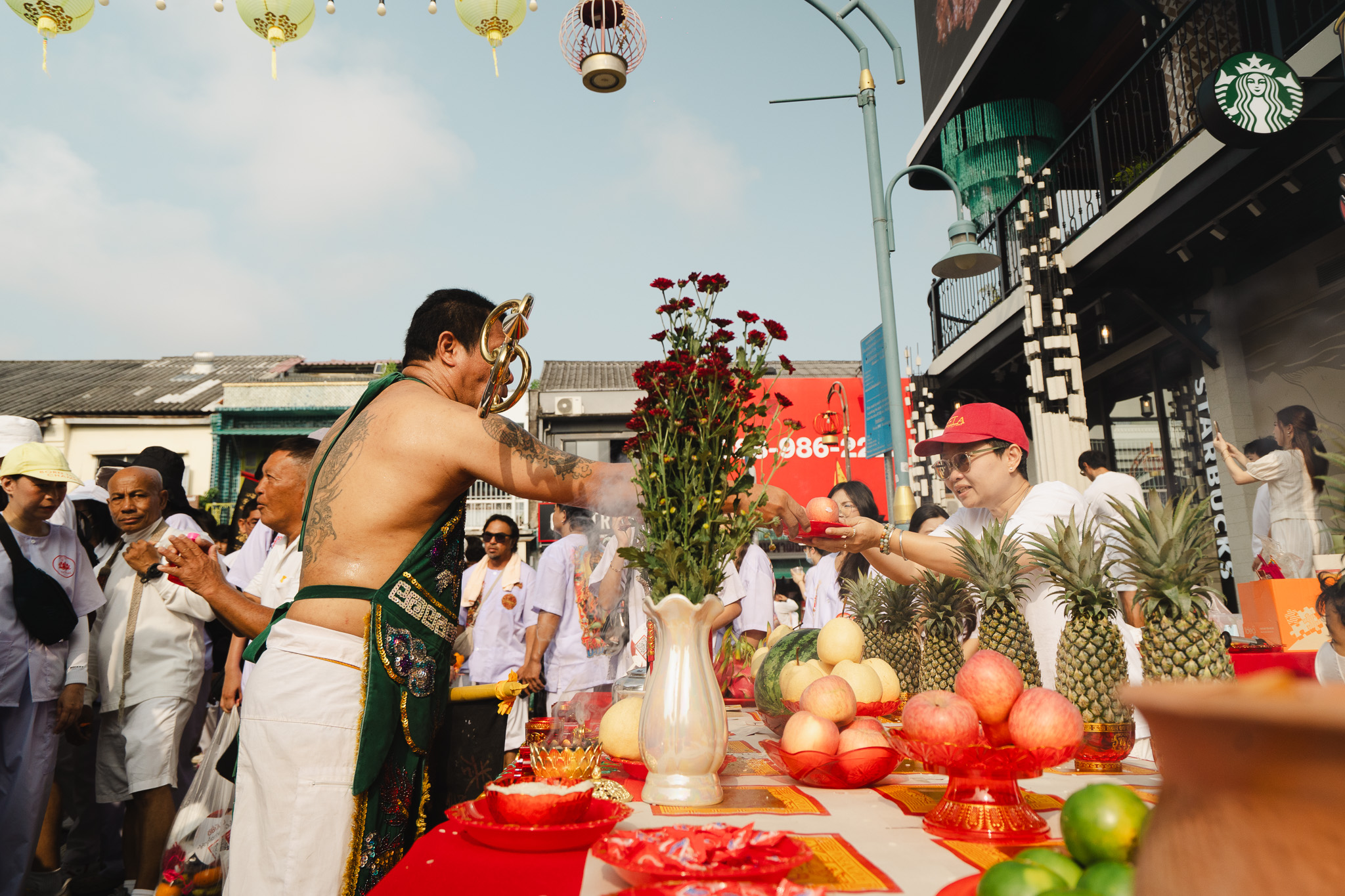
A Tradition of Faith, Auspicious Offerings, and Phuket’s Living Heritage
Every year, as the Phuket Vegetarian Festival approaches, the island takes on a distinctive atmosphere of devotion. Yellow flags appear along the streets, incense fills the air, and families, businesses, and local communities prepare offerings to welcome the arrival of the divine.
At the heart of this tradition is Kiu Ong Tai Te (九皇大帝), the Nine Emperor Gods, revered in Chinese religious traditions and central to the Phuket Vegetarian Festival. For many local Chinese-Thai families, the festival is more than an annual religious observance. It is a time for spiritual reflection, purification, and reconnecting with customs passed down through generations.
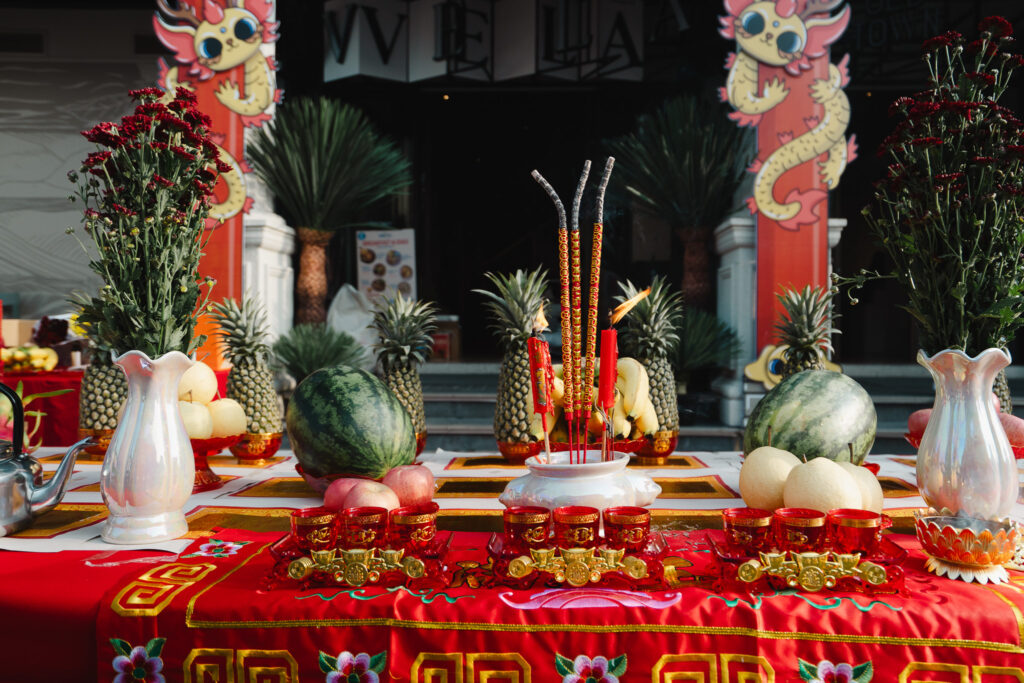
One of the meaningful traditions during this period is the preparation of an offering table to welcome the deities. Arranged with flowers, fruits, incense, candles, and nine cups, these tables express the community’s respect, devotion, and joy in welcoming the divine.
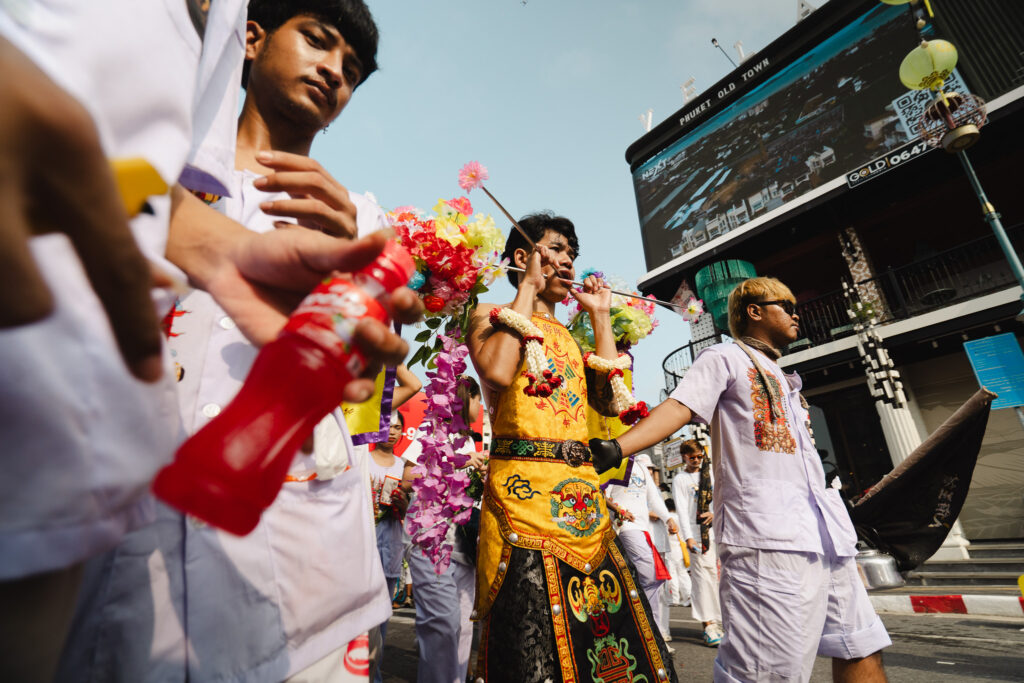
The Legend of Kiu Ong Tai Te: A Tradition Rooted in Faith
In Chinese religious traditions, Kiu Ong Tai Te refers to the Nine Emperor Gods, whose worship is associated with celestial beliefs, the stars, and the forces of the universe. The tradition has been preserved in Chinese communities across Southeast Asia, where it has become closely associated with the Nine Emperor Gods Festival and the Phuket Vegetarian Festival.
According to a widely shared local account of the festival’s origins, a Chinese opera troupe arrived in Kathu, Phuket, in the early nineteenth century. When an epidemic occurred, the troupe reportedly realised that it had neglected its customary religious observances. Its members subsequently adopted a vegetarian diet, observed religious practices, and performed rituals to honour the gods.
When the epidemic subsided, the community came to associate the recovery with the power of faith. The practice was gradually adopted by local residents and developed into the Vegetarian Festival that Phuket celebrates today.
Although different accounts of the festival’s origins contain variations, the central values remain consistent: devotion, spiritual discipline, purification, and collective participation.
For Phuket’s Chinese-Thai community, welcoming the Nine Emperor Gods is therefore a deeply meaningful occasion. Preparing an offering table is not simply a ritual task; it is an expression of respect and a way of preserving a cultural tradition that continues to connect generations.
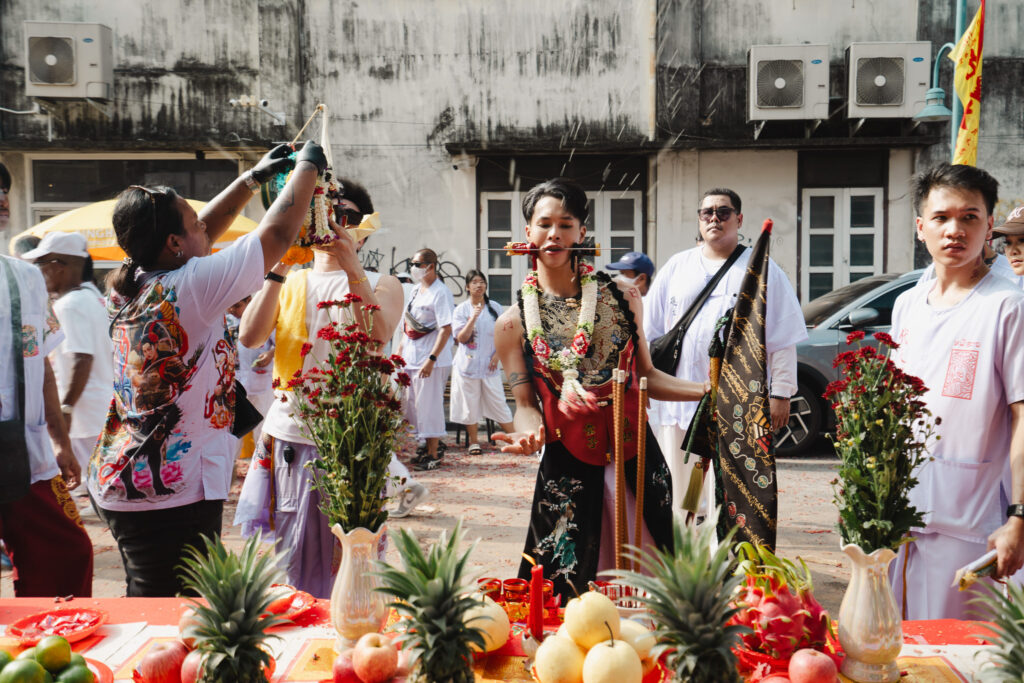
The Welcoming Table: Where Every Detail Carries Meaning
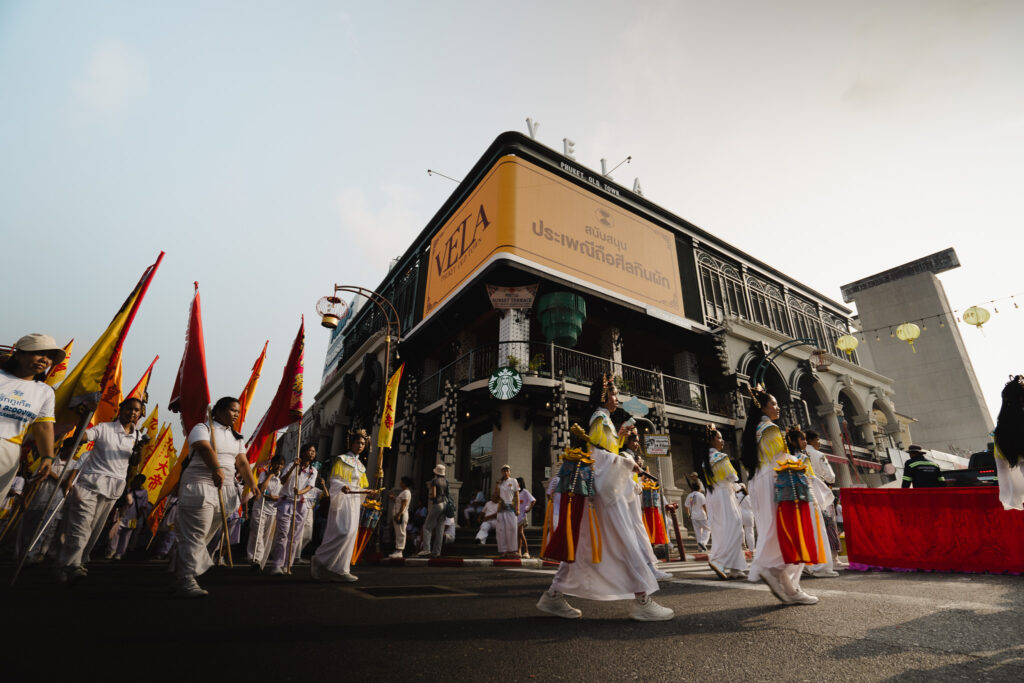
During the Phuket Vegetarian Festival, visitors may notice carefully arranged offering tables in front of homes, shops, shrines, and other buildings throughout the Old Town.
These tables are prepared to welcome the deities as ceremonial processions pass through the community. Their arrangements may vary according to family customs, local traditions, and the practices of individual shrines, but commonly include flowers, fruits, incense, candles, and tea cups.
Each element contributes to the ceremony, combining visual beauty with religious significance.
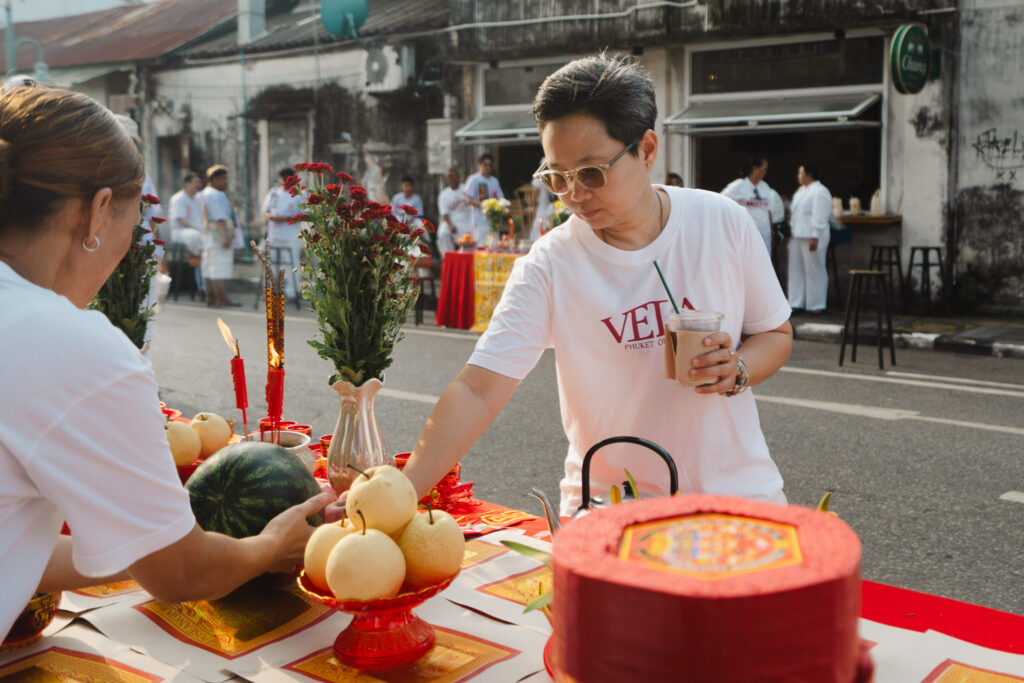
Nine Cups: Honouring the Nine Emperor Gods
One of the distinctive elements of the offering table is the arrangement of nine cups, associated with the Nine Emperor Gods.
In Chinese culture, the number nine is often connected with longevity, continuity, and auspiciousness. The nine cups therefore serve as a symbolic expression of reverence for the deities and a wish for peace, prosperity, and well-being within the family and community.
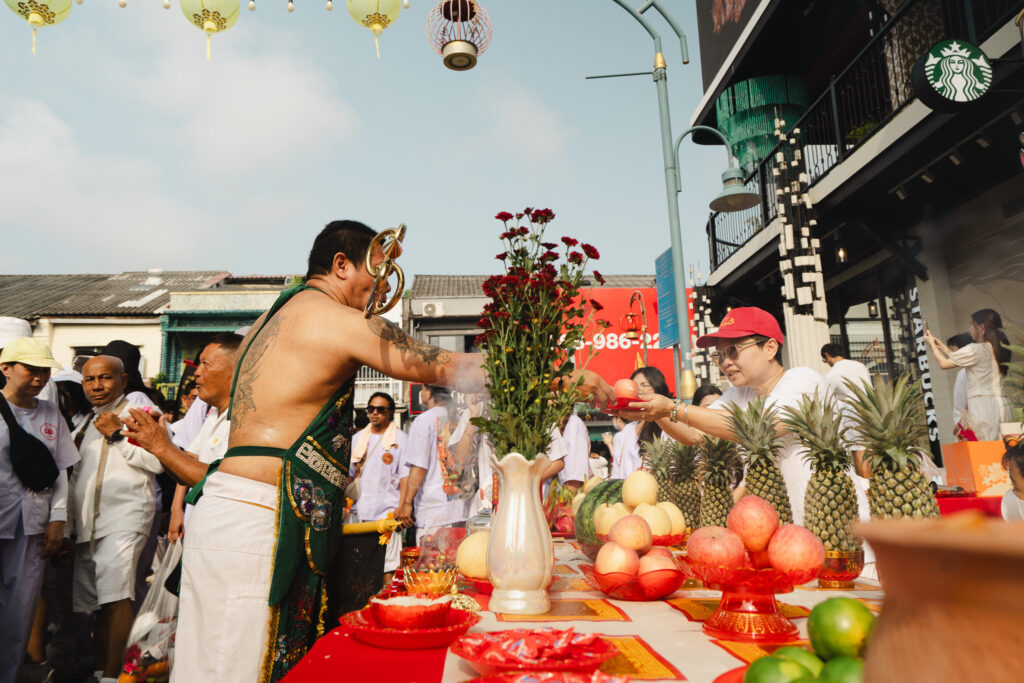
As the ceremonial procession approaches, worshippers prepare their offerings and pay their respects according to local customs. The act of welcoming the deities becomes a shared moment of devotion, bringing families, business owners, and neighbours together.
Flowers and Fruits: Offerings of Beauty and Auspicious Wishes
Flowers and fruits are important elements of traditional Chinese offerings. Beyond their appearance, they can symbolise purity, abundance, prosperity, and the sincere intentions of those who prepare them.
The symbolic meanings of individual fruits, however, are not universal. Some interpretations come from wordplay in Chinese dialects, while others reflect local customs and family traditions. Their meanings may therefore differ between communities.
Why Are Odd Numbers Used in Traditional Offerings?
In several Chinese ritual traditions, odd numbers are associated with yang energy and certain forms of ceremonial offerings. However, the number of items used can vary according to the type of ritual, the local community, and the customs of a particular shrine.
It is useful to distinguish this broader tradition of using odd numbers from the nine cups specifically associated with the Nine Emperor Gods. The two practices may carry different meanings and should not be treated as interchangeable rules.
These details reveal that preparing an offering table is more than an exercise in decoration. It is a cultural practice shaped by generations of knowledge, belief, and attention to detail.
Phuket’s Joy in Preserving a Living Tradition
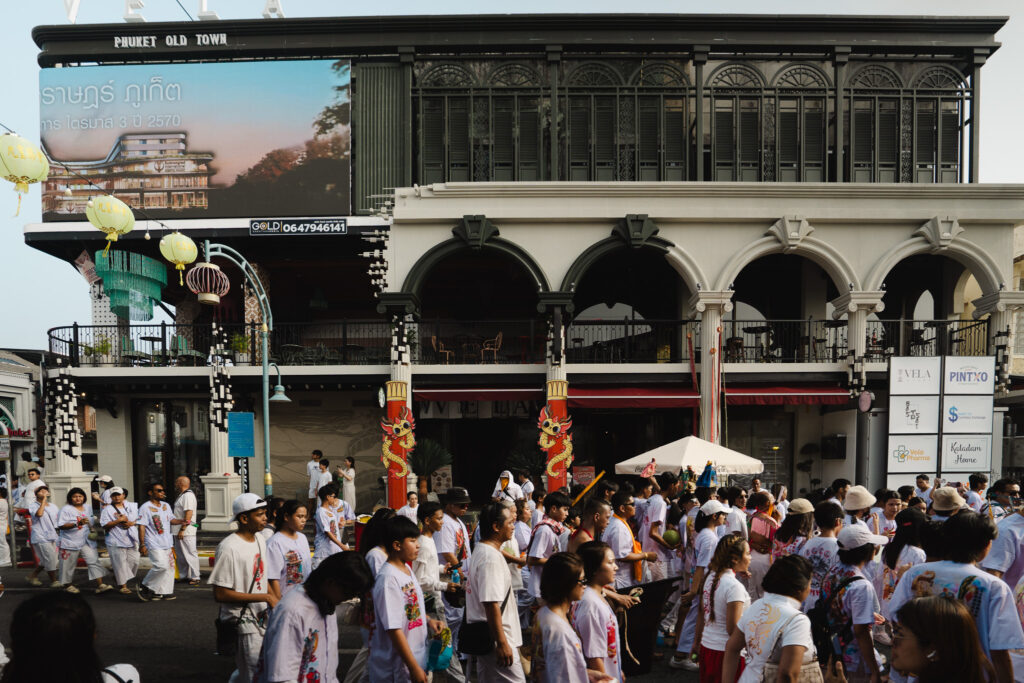
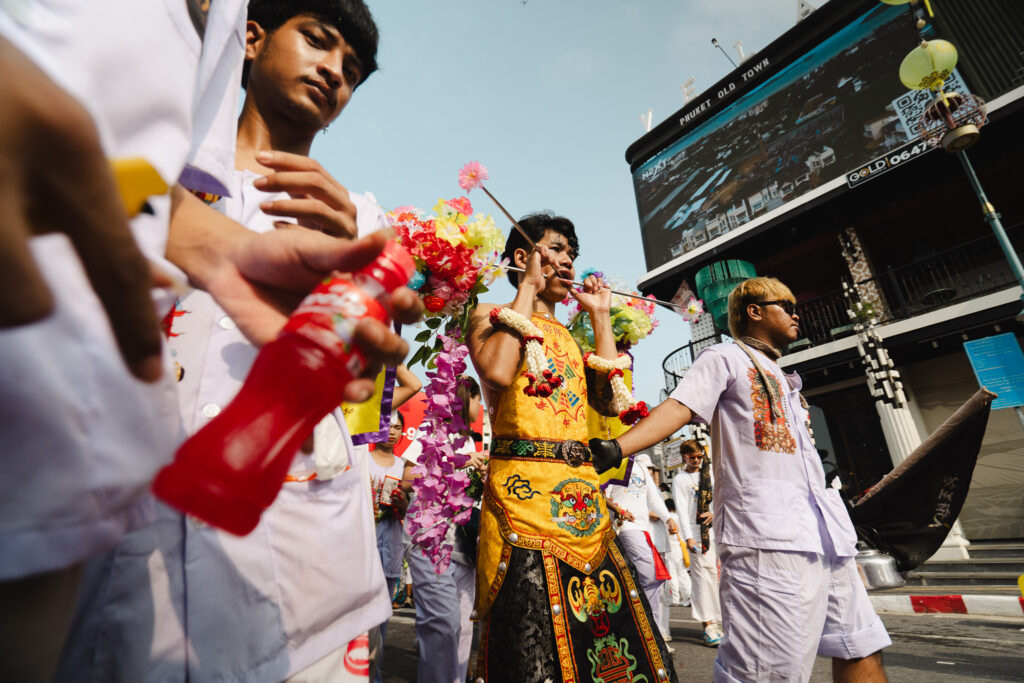
What makes the Phuket Vegetarian Festival particularly distinctive is that its traditions extend far beyond the walls of the island’s shrines.
Throughout Phuket Old Town, families and businesses prepare offering tables with care. Some follow arrangements passed down by their ancestors, while younger generations learn the customs and participate in keeping them alive.
When ceremonial processions pass through the streets, people gather to welcome the deities and pay their respects. The atmosphere reflects not only religious devotion but also a strong sense of belonging to a shared cultural heritage.
The flowers, fruits, incense, and nine cups arranged on each table become part of a larger story: one about the relationship between people, their beliefs, and the place they call home.
For Phuket’s residents, preserving this tradition is a source of cultural pride. It allows the community to maintain its connection with the past while welcoming visitors who wish to understand the island beyond its familiar tourist attractions.
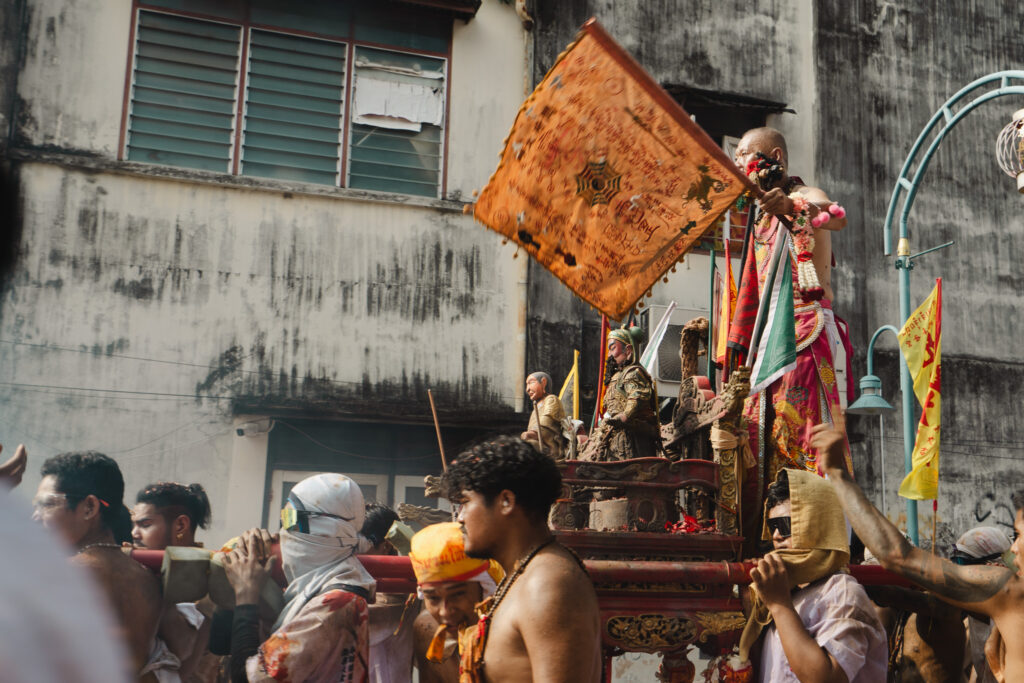
VELA Phuket Old Town: Becoming Part of Phuket’s Cultural Heritage
At VELA Phuket Old Town, being part of the Old Town means more than occupying a place surrounded by historic architecture. It also means participating in the cultural life of the community and recognising the traditions that continue to shape Phuket’s identity.
During the Phuket Vegetarian Festival, VELA supports activities connected with local shrines and the island’s traditional celebrations, helping visitors discover the cultural significance of the festival and the people who preserve it.
The welcoming table offers a meaningful connection between Phuket’s heritage and contemporary life. While the way people live and work continues to evolve, the values expressed through these traditions—respect, generosity, community, and the joy of welcoming auspicious beginnings—remain relevant.
For VELA, this is part of the spirit of “Old Meets New”: allowing the history and traditions of Phuket Old Town to remain present within a contemporary lifestyle destination.
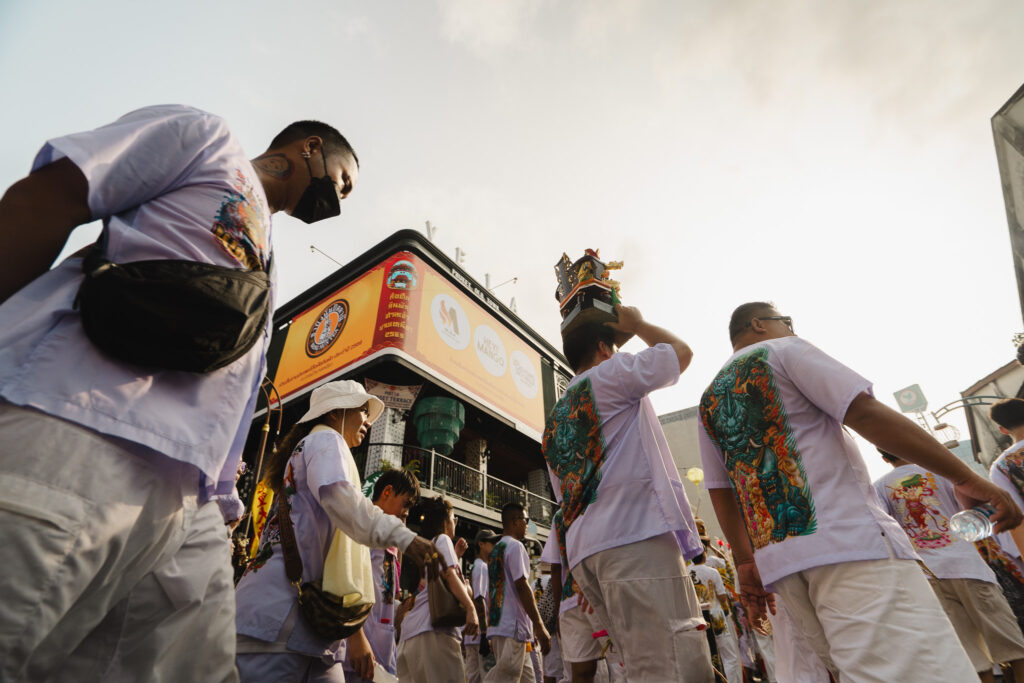
The beauty of Phuket’s Old Town lies not only in the architecture that has been preserved, but also in the traditions that its people continue to practise and share.
Each offering table tells a small part of that story. Through the preparation of flowers and fruits, the arrangement of nine cups, and the gathering of people along the streets, the community welcomes the Nine Emperor Gods while passing its cultural heritage on to the next generation.
As the Vegetarian Festival returns each year, these traditions remind us that heritage is not simply something to look back on. It is something people continue to create, celebrate, and carry forward together.
At VELA Phuket Old Town, we are proud to be part of this living tradition and to share in the joy of welcoming Phuket’s cultural heritage, year after year.